Welcome: Chengdu JUYUAN Optoelectronic Technology Co., Ltd.
Language:
 ∷
∷

∷
 ∷
∷

In the world of optoelectronic detection, there's an old saying: "If you can't measure it accurately, you might as well not measure at all."
Especially when it comes to UV-band experiments, more often than not, data drift and inconsistent comparisons don't come from your sample or your technique—they come from your "eyes." That is, your spectrometer itself has gone out of spec.
Lately, there's been quite a bit of buzz in lab circles about this JYJG Series UV Spectral Calibrator from Chengdu Juyuan Optoelectronics Technology. And honestly, it addresses a fundamental "reference" problem that plagues many optical engineers and lab PIs.
In daily work—whether it's UV curing, thin-film analysis, or photochemical experiments—the biggest nightmare is distortion caused by light source decay. When you replace a UV lamp or readjust your optical path, how do you confirm that the emitted wavelength is still accurate? That's exactly when you need a standard calibration light source.
In essence, the JYJG 150/70 acts as a vernier caliper for light.
Its logic is straightforward: it gives you a known, stable spectral line to compare against your device, so any deviation becomes obvious. The real challenges, however, lie in two words: stability and convenience.
First, this thing is surprisingly compact.
Traditional calibration systems often involve bulky, complicated desktop setups. But Juyuan has shrunk the footprint to 250mm × 250mm × 120mm—smaller than a typical microwave oven. You can place it right next to a clean bench or slide it into a shelf gap without taking up precious real estate. For crowded lab benches, this space-saving design is a game-changer.
Second, the "interchangeable lamp" feature is a stroke of genius.
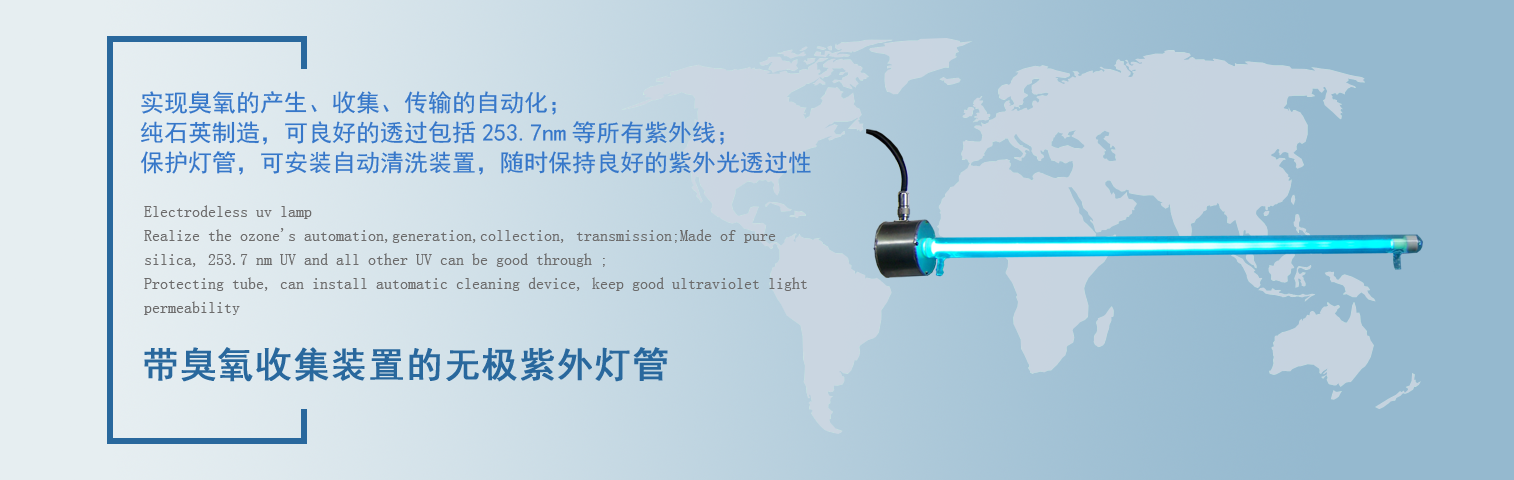
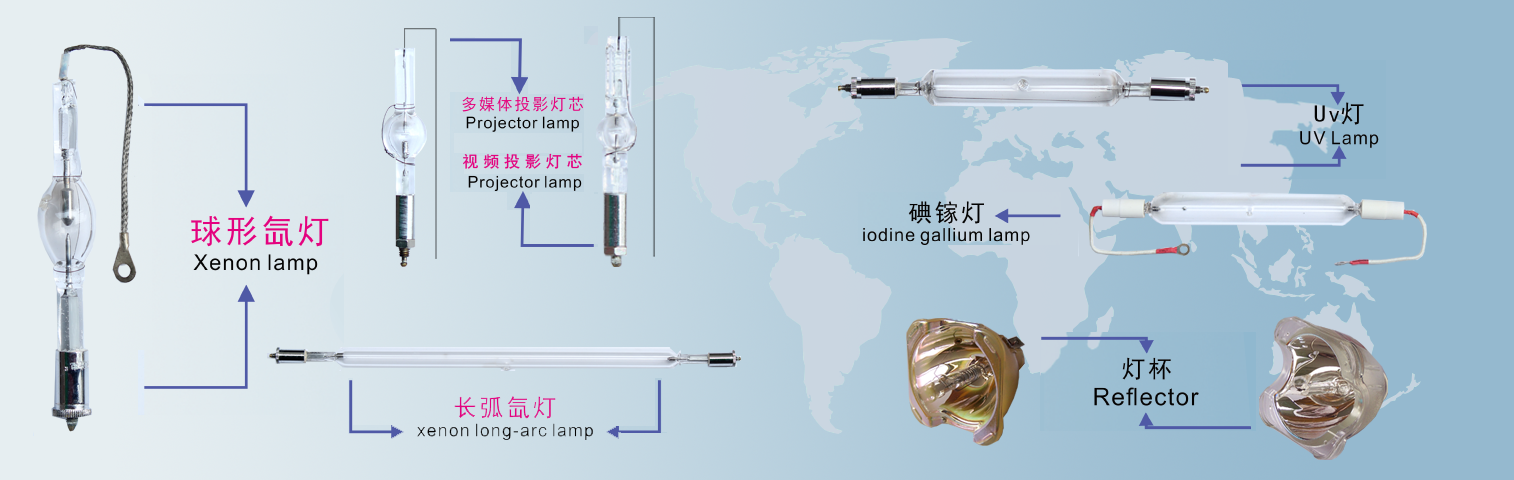
Many calibrators on the market lock you into a single light source—if you buy a mercury lamp, you're stuck with mercury. Want an Iron lamp? You have to buy another unit. The JYJG series, however, lets you quickly swap between iron lamps, gallium iodide lamps, and electrodeless lamps depending on your spectral needs. That means one single host covers multiple UV wavelength bands. Think of it as a universal base with swappable heads—it dramatically boosts cost-effectiveness.
Third, it offers selectable power and plug-and-play simplicity.
Two models are available: JYJG 150 (150W) and JYJG 70 (70W). This isn't just about brightness—it's about matching different detector sensitivities. For high-end photomultiplier tubes, a 150W beam might cause saturation; 70W is often a better fit. Conversely, in harsh industrial environments with high stray light, the 150W's extra intensity cuts through the noise. Both run on standard 220V mains power—no external power supply needed. Just plug in and start working.
What inspires the most confidence? This unit has already been selected by multiple research institutes for their optical calibration workflows.
Veteran lab technicians know that institutional procurement isn't swayed by flashy ads—it's all about long-term operational stability and spectral fidelity. If a research institute trusts this device as their calibration reference, you can bet its spectral line drift over extended use is exceptionally well-controlled.
To sum it up: if you're involved in UV curing, photochemical synthesis, or routine spectrometer wavelength verification, this calibrator is one of those "you-don't-think-about-it-until-it-saves-your-experiment" pieces of equipment. Its value isn't in fancy gimmicks—it's in giving you a definitive, unquestionable answer.
And in scientific research, certainty is the ultimate productivity booster.
#UVSpectralCalibrator #UVCalibration #OpticalLab #JuyuanOptoelectronics #SpectralAnalysis #ResearchInstruments #LabEquipment #OpticalCalibration
Contact: QianShuang
Phone:
Tel: (86)028-84123481
Email: vigce_com@126.com
Add: NO.178 WenJia Road,Chengdu,Sichuan,P.R.China
 vigce
vigce vigce
vigce
 vigce
vigce